By

August 11, 2026
How Do I Import Goods From China to the UK?
Importing goods from China to the UK can be an effective way for businesses to source products, reduce manufacturing costs and expand their product range.
However, importing commercially involves more than simply ordering products from a Chinese supplier.
Before the goods arrive in the UK, you should understand:
A typical import looks like:
Find Chinese supplier
↓
Check the product can be imported
↓
Get a UK EORI number
↓
Find the commodity code
↓
Calculate Customs Duty and Import VAT
↓
Arrange shipping
↓
Complete customs declaration
↓
Clear UK customs
↓
Receive the goods
The first step is finding a suitable manufacturer or wholesaler.
Before placing a large order, check information such as:
Where possible, order samples before committing to a large shipment.
The cheapest supplier is not necessarily the best supplier. Poor-quality goods can create returns, compliance problems and reputational damage.
Before ordering, make sure the product can legally enter the UK.
Some goods may require:
Products such as food, cosmetics, chemicals, electrical goods and certain agricultural products can have additional requirements.
The product's commodity code can help identify applicable import controls.
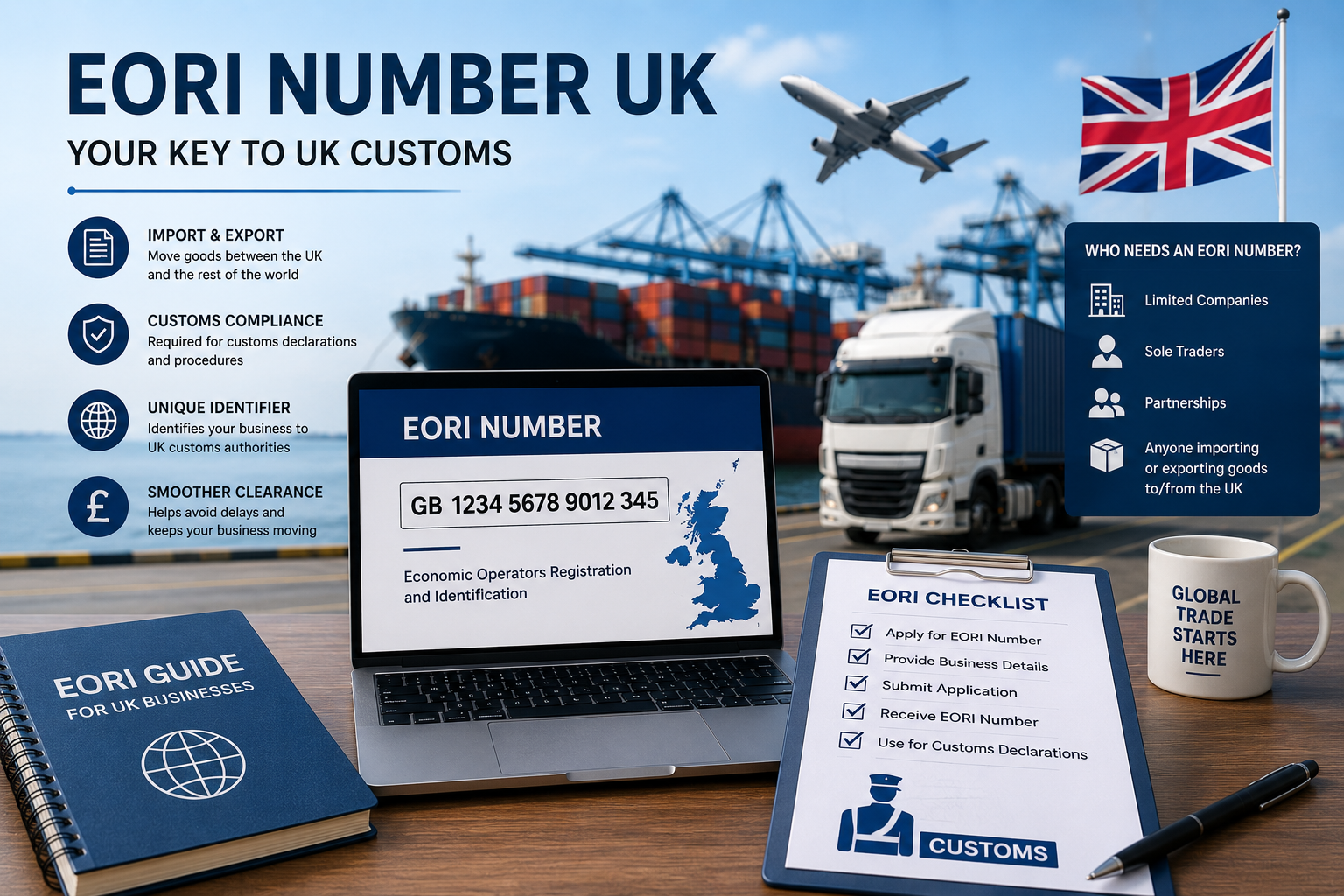
Businesses importing goods into England, Scotland or Wales generally need an EORI number beginning with GB.
An EORI identifies your business for customs purposes.
For example:
UK limited company
↓
Purchases stock from China
↓
Goods enter Great Britain
↓
GB EORI used for customs
An EORI is different from your:
Companies House number
and
VAT registration number
Businesses should obtain the appropriate EORI before their first commercial shipment.
Every type of imported product needs to be correctly classified.
The commodity code determines important customs information including:
You can find commodity codes through the UK Trade Tariff.
Do not automatically rely on the commodity code provided by your Chinese supplier. The UK importer should make sure the correct UK classification is being used.
Once you have identified the commodity code, check the current UK Trade Tariff.
This helps establish:
Commodity code
Country of origin
↓
Customs Duty rate
Import VAT treatment
Import requirements
Different products can attract very different duty rates.
Some goods may have 0% Customs Duty, while others can attract significantly higher rates.
Customs Duty is generally calculated using the customs value of the imported goods.
The customs value is not necessarily just the amount paid to the Chinese supplier.
Depending on the transaction, it can include amounts such as:
A simplified example might be:
Goods: £10,000
Freight and relevant costs: £1,000
Customs value: £11,000
The applicable Customs Duty rate can then be applied to the customs value.
For goods where Customs Duty is charged as a percentage, a simplified calculation is:
Customs value × applicable duty rate = Customs Duty
For example:
Customs value: £10,000
Illustrative duty rate: 5%
Customs Duty:
£10,000 × 5% = £500
The actual rate depends on the product's commodity code and current tariff measures.
Never assume there is one standard UK Import Duty rate for goods from China.
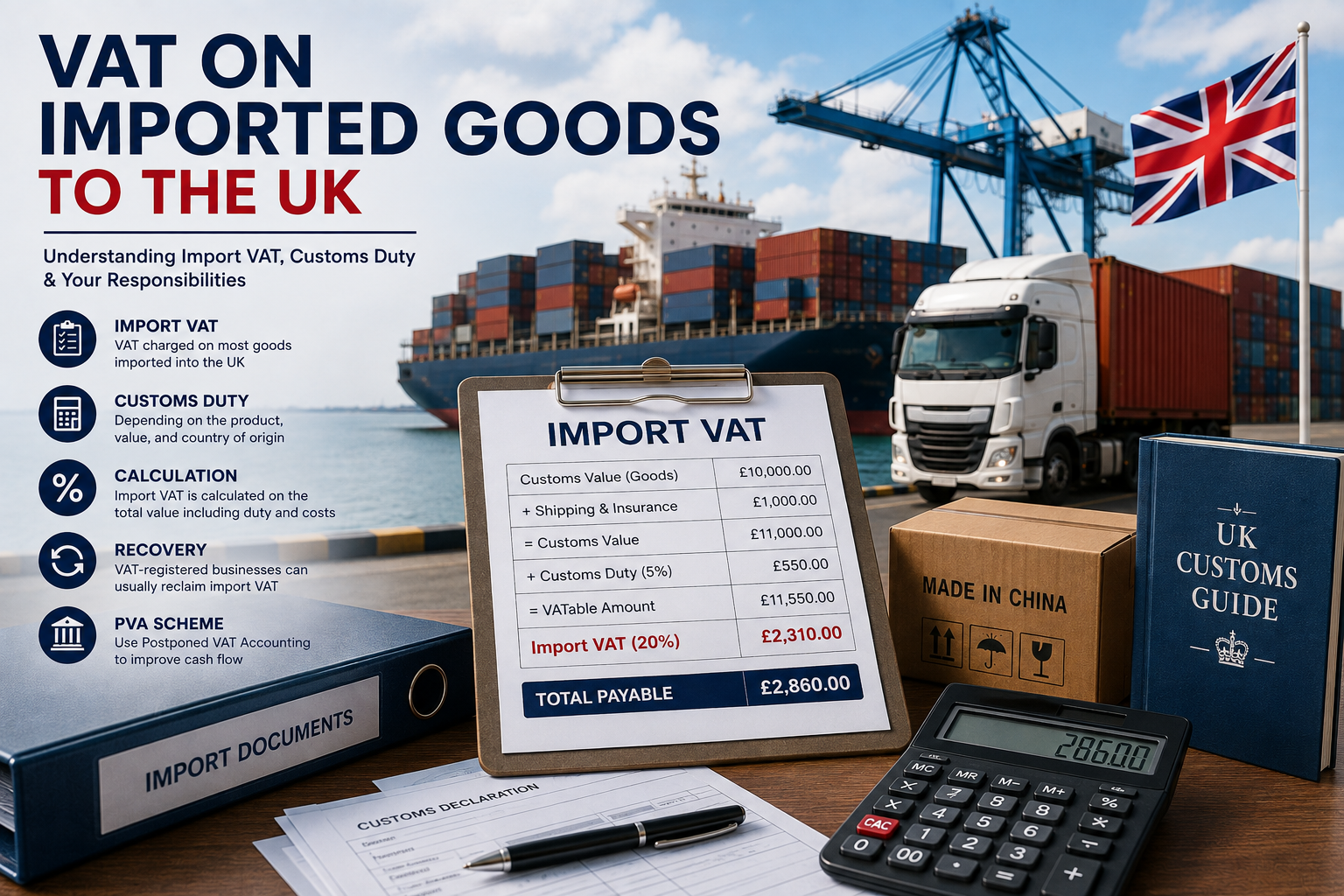
Import VAT is separate from Customs Duty.
A simplified Import VAT calculation can include:
Customs value
Customs Duty
Relevant additional costs
=
Import VAT value
The appropriate UK VAT rate is then applied.
For example:
VAT value: £10,500
If the goods are subject to 20% VAT:
£10,500 × 20% = £2,100 Import VAT
The actual calculation depends on the applicable customs and VAT valuation rules.
If your business is VAT registered, eligible Import VAT may potentially be reclaimed subject to the normal VAT recovery rules.
Businesses may also be able to use Postponed VAT Accounting (PVA).
PVA can allow qualifying businesses to account for Import VAT through their VAT Return rather than paying it upfront and reclaiming it later.
This can provide an important cash-flow advantage for businesses importing regularly.
Customs Duty, however, generally remains part of the cost of importing the goods.
Goods can be transported from China to the UK using several methods.
Generally faster but more expensive.
Suitable for:
Generally slower but can be more economical for larger shipments.
Suitable for:
Companies such as international express couriers can be convenient for:
The best option depends on the shipment's size, weight, value and urgency.
Before placing an order, agree the Incoterms with your supplier.
Common terms include:
EXW
FOB
CIF
DAP
DDP
These terms help determine responsibilities for areas such as:
Do not choose an Incoterm simply because the supplier says it is easiest.
Understand exactly:
Who arranges shipping?
Who clears customs?
Who acts as importer?
Who pays Customs Duty?
Who pays Import VAT?
Most businesses importing goods use a customs agent, freight forwarder or transporter to help move and clear the shipment.
They may handle:
However, you still need to provide accurate information about the goods.
Make sure they have the correct:
EORI number
Commodity code
Country of origin
Customs value
Supplier invoice
and other required documentation.
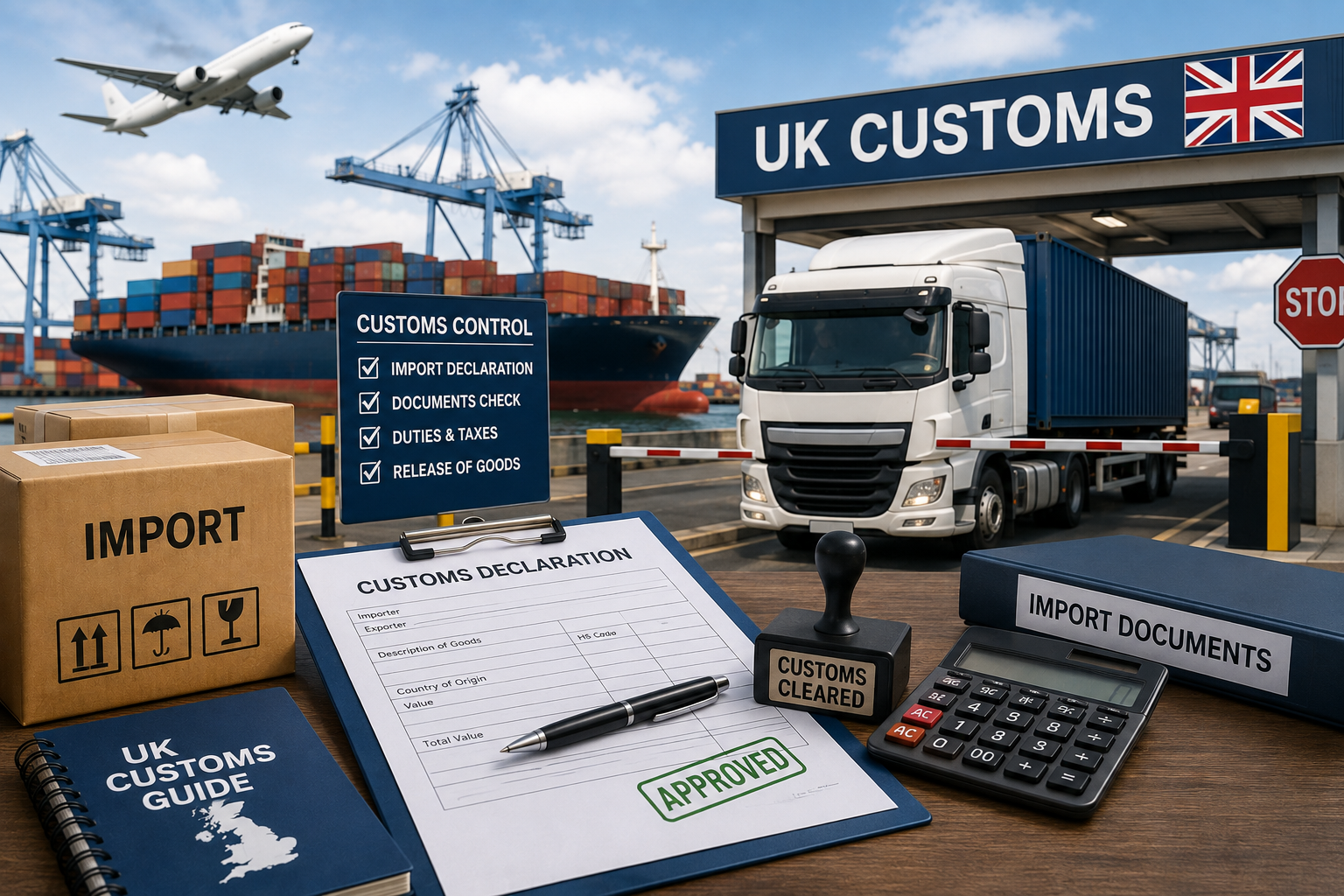
Commercial goods imported from China generally need to be declared to UK customs.
The declaration includes information such as:
Your customs agent can usually complete the declaration on your behalf.
Before goods can be released, any applicable customs charges need to be dealt with.
Depending on the arrangements, these can include:
Customs Duty
Import VAT
Customs clearance charges
Port or handling fees
Courier administration charges
Import VAT may be handled differently where Postponed VAT Accounting is used.
One of the biggest mistakes importers make is focusing only on the Chinese supplier's price.
Instead, calculate the landed cost.
A simplified formula is:
Product cost
Freight
Insurance
Customs Duty
Non-recoverable taxes
Customs clearance
Port charges
UK delivery
=
Total landed cost
For example, a product costing £5 from a Chinese supplier may actually cost significantly more by the time it reaches your UK warehouse.
Calculate this before placing a large order.
Imagine a UK ecommerce company orders:
£20,000 of products from China
The company would typically need to:
1. Confirm the products meet UK requirements
2. Obtain a GB EORI
3. Find the commodity codes
4. Check the UK Trade Tariff
5. Calculate estimated Customs Duty
6. Calculate Import VAT
7. Arrange freight
8. Prepare customs documentation
9. Make the import declaration
10. Clear the goods through UK customs
11. Arrange delivery to its warehouse
The business should calculate the full landed cost before committing to the £20,000 order.
Depending on the goods and shipment, documents can include:
The exact requirements depend on the goods.
Yes.
A UK business can source products through platforms such as Alibaba or directly from Chinese manufacturers.
However, purchasing through an online marketplace does not remove your customs responsibilities.
You should still check:
Supplier
Product compliance
Commodity code
Customs Duty
Import VAT
Shipping
and
Customs clearance
before placing a commercial order.
Potentially, yes.
VAT registration and importing are separate issues.
However, a business that is not VAT registered will generally not be able to reclaim Import VAT through a VAT Return.
Import VAT may therefore become part of the cost of the products.
Shipping times vary considerably depending on:
For this reason, businesses should obtain current transit estimates directly from their freight forwarder rather than relying on a fixed number of days.
UK businesses should avoid:
If your business imports goods into Great Britain and needs to complete customs procedures, it will generally need a GB EORI number.
Potentially. The Customs Duty rate depends on the product's commodity code and applicable tariff measures.
Import VAT can apply when goods enter the UK.
A VAT-registered business may potentially reclaim eligible Import VAT, subject to the normal VAT rules and evidence requirements.
You can handle customs yourself in some circumstances, but many businesses use a customs agent or freight forwarder.
Certain transport and related costs can form part of the customs or Import VAT valuation depending on the applicable rules.
Yes. A UK limited company can purchase goods directly from Chinese manufacturers and suppliers, provided the applicable customs, tax and product-compliance requirements are met.
So, how do you import goods from China to the UK?
The basic process is:
Find a reliable supplier
↓
Check UK product requirements
↓
Get a GB EORI
↓
Find the commodity code
↓
Check the UK Trade Tariff
↓
Calculate Customs Duty and Import VAT
↓
Choose shipping and Incoterms
↓
Prepare customs documentation
↓
Clear the goods through UK customs
↓
Receive your stock
The most important step is to calculate the total landed cost before ordering.
A cheap factory price does not necessarily mean a profitable product once you include:
Freight + insurance + Customs Duty + Import VAT + clearance + UK delivery
Understanding these costs before placing a large Chinese supplier order can help protect your margins and avoid unexpected charges when the goods arrive.
This article provides general information only and does not constitute customs, tax, accounting, product-safety or legal advice. Import requirements, tariff measures and product regulations can change. Check current HMRC and relevant UK regulatory guidance for your specific goods before importing.