By

August 11, 2026
How Does Import VAT Work in the UK?
Import VAT is VAT that can become due when goods are brought into the UK from overseas.
For UK businesses importing stock, equipment or other goods, Import VAT is different from Customs Duty. A VAT-registered business may often be able to reclaim eligible Import VAT, while Customs Duty generally remains a business cost.
VAT-registered businesses may also be able to use Postponed VAT Accounting (PVA), which allows Import VAT to be declared and potentially reclaimed through the same VAT Return rather than being paid upfront.
Import VAT can arise when goods are imported into the UK.
For example:
Overseas supplier
↓
Goods enter the UK
↓
Customs declaration
↓
Import VAT calculated
The VAT rate generally follows the UK VAT treatment applicable to the goods.
This means different products can potentially have different Import VAT treatment.
Import VAT is not necessarily calculated only on the supplier's invoice price.
HMRC states that the VAT value starts with the customs value of the goods, even if no Customs Duty is payable. Additional amounts can then be included.
The VAT value can potentially include:
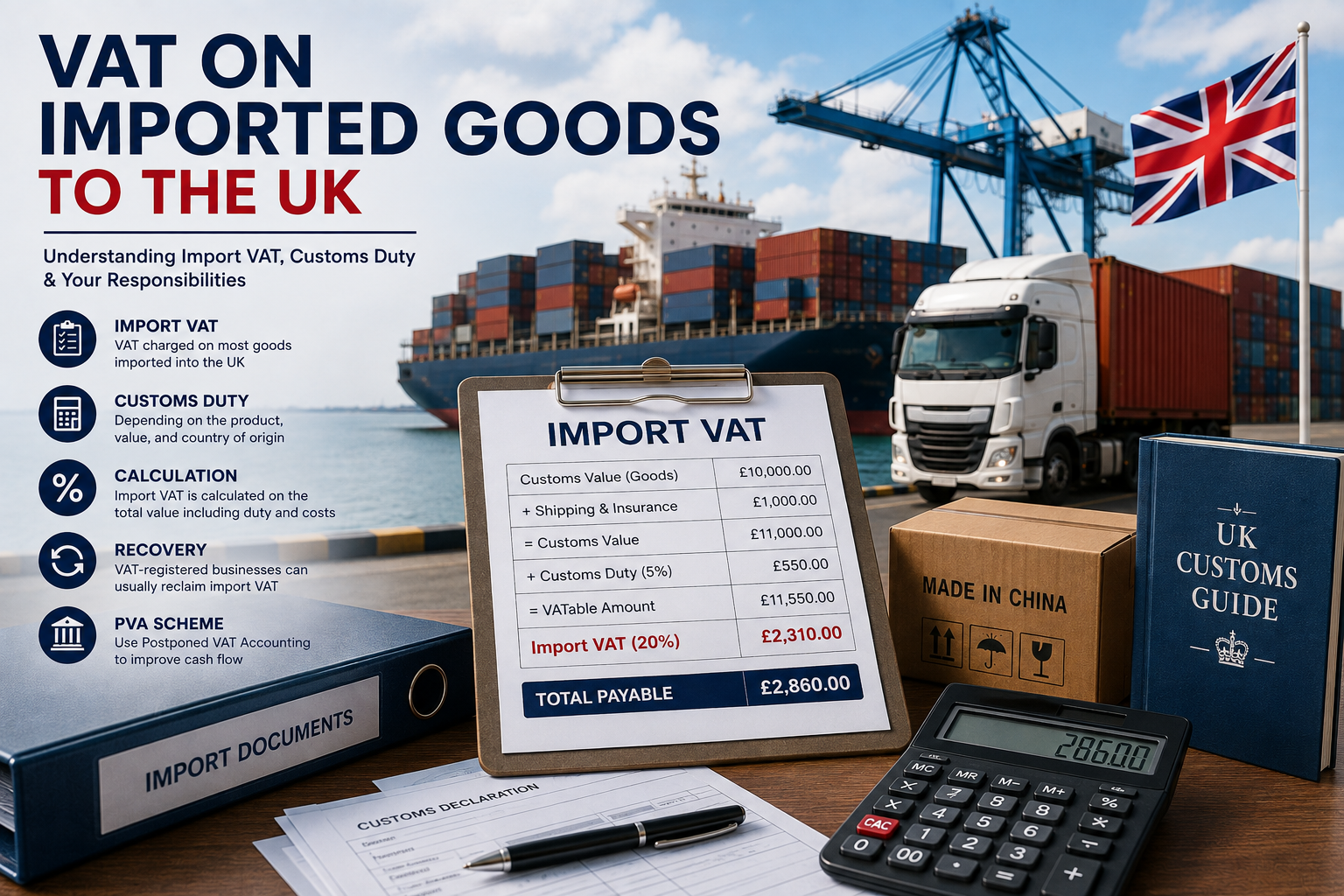
A simplified calculation is:
Customs value
Customs Duty
Relevant additional costs
=
Import VAT value
The applicable VAT rate is then applied to this value.
Suppose a UK company imports goods with:
Customs value: £10,000
Customs Duty: £500
For illustration, assume the Import VAT value is:
£10,500
If the applicable VAT rate is 20%:
£10,500 × 20% = £2,100
Potential Import VAT:
£2,100
Actual customs valuation can include additional costs, so businesses should use the appropriate HMRC valuation rules.
No.
These are separate charges.
Determined by factors such as:
VAT calculated on the relevant import VAT value.
A VAT-registered company may potentially reclaim qualifying Import VAT.
Customs Duty generally remains part of the cost of importing the goods.
Potentially, yes.
A VAT-registered business can generally reclaim eligible Import VAT where the goods are used for business activities that allow VAT recovery and the company has the required evidence.
The method of reclaim depends partly on how the Import VAT was accounted for.
Businesses using Postponed VAT Accounting use their postponed Import VAT statements to support the VAT Return.
Postponed VAT Accounting (PVA) allows qualifying VAT-registered businesses to account for Import VAT through their VAT Return.
Instead of:
Import goods
↓
Pay Import VAT upfront
↓
Reclaim VAT later
PVA can allow:
Import goods
↓
Declare Import VAT on VAT Return
↓
Reclaim eligible Import VAT on the same Return
This can provide an important cash-flow advantage.
No.
Import VAT still exists.
PVA simply changes how it is accounted for.
If the business is fully entitled to recover the VAT, the Import VAT declared and reclaimed through the Return may offset each other.
If your business uses PVA, HMRC provides monthly postponed Import VAT statements through the Customs Declaration Service.
These statements show Import VAT associated with declarations made using the business's EORI number and provide information needed for the VAT Return.
Businesses should download and retain these statements as part of their VAT records.
Where Import VAT is actually paid rather than accounted for through PVA, VAT-registered businesses may receive an Import VAT certificate known as a C79.
HMRC confirms that C79 certificates provide evidence of Import VAT paid and can be used to support eligible VAT recovery.
In simple terms:
PVA → postponed Import VAT statement
Import VAT paid → C79 may provide supporting evidence
Not usually on the overseas supplier invoice alone.
The supplier invoice shows the commercial purchase, but UK Import VAT arises through the customs process.
The company should therefore retain the correct evidence, such as:
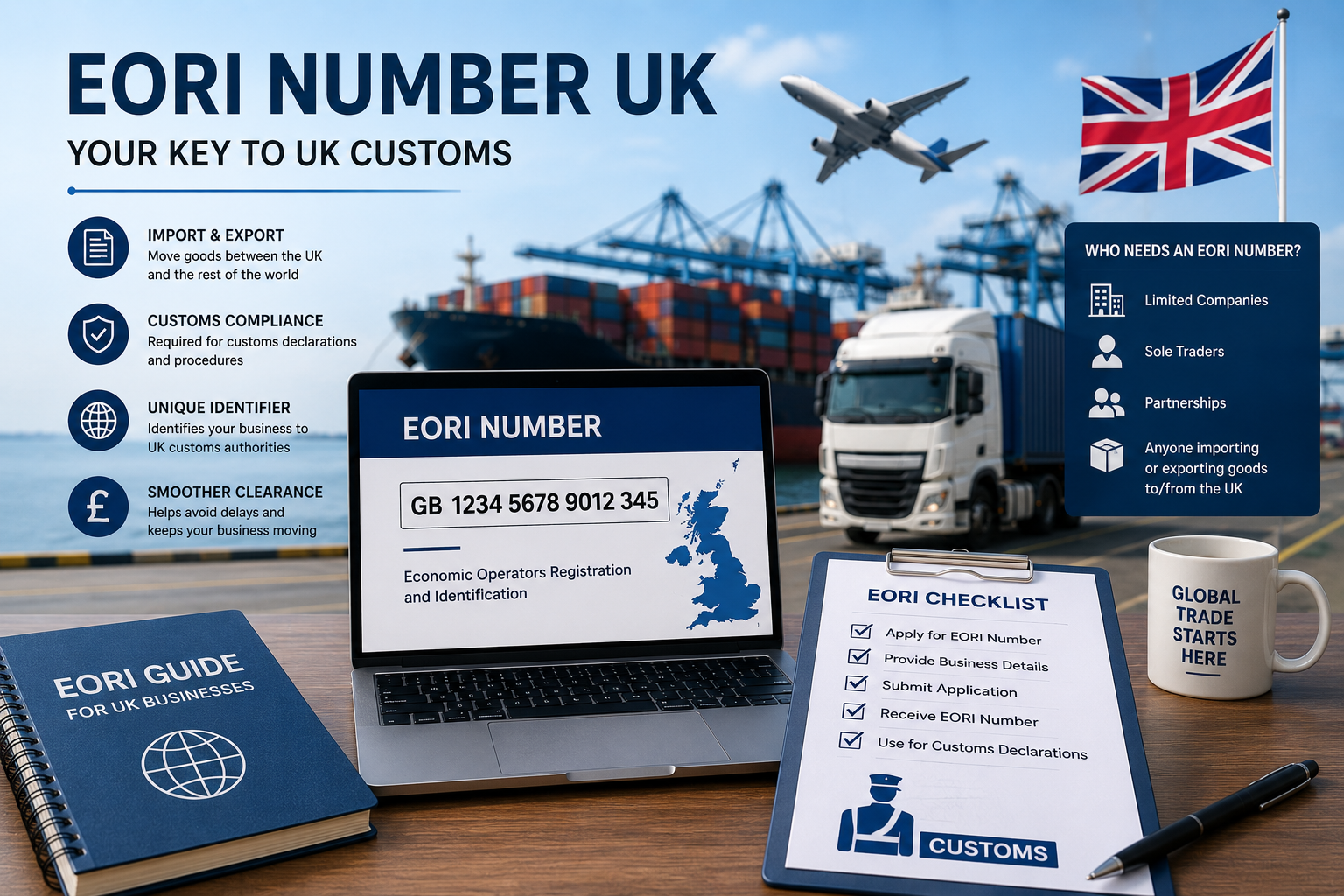
Businesses importing goods into Great Britain generally need the appropriate EORI number for customs purposes.
An EORI number identifies the business when making customs declarations.
It is different from a VAT registration number.
Importers should make sure customs agents use the correct business details because incorrect EORI or VAT information can cause problems with Import VAT records.
Goods imported from China into the UK can potentially be subject to:
Customs Duty
Import VAT
Customs clearance costs
The Customs Duty depends on the commodity code, origin and tariff rules.
Import VAT is then calculated separately using the appropriate VAT value.
A VAT-registered business may potentially recover eligible Import VAT.
The same basic principle applies to goods entering the UK from the United States.
Import VAT may arise regardless of whether Customs Duty is payable.
This means:
0% Customs Duty
does not automatically mean:
0% Import VAT
Goods entering Great Britain from EU countries are generally treated as imports for VAT and customs purposes.
Import VAT can therefore arise.
A VAT-registered company can potentially use PVA or recover eligible Import VAT under the normal rules.
Special arrangements can apply to certain movements involving Northern Ireland.
A company that is not VAT registered generally cannot reclaim Import VAT through a VAT Return.
For example:
Goods: £10,000
Import VAT: £2,000
If the VAT cannot be recovered, that £2,000 effectively becomes part of the company's import cost.
This can significantly affect product margins.
Special VAT rules can apply to certain lower-value goods sold directly to UK customers or through online marketplaces.
The tax can sometimes be collected at the point of sale rather than through the normal border Import VAT process.
The treatment depends on factors including:
Businesses using international ecommerce supply chains should check the specific rules that apply to their transactions.
A UK company's involvement in a transaction does not automatically mean UK Import VAT arises.
For example:
Chinese supplier
↓
Ships directly to US customer
The goods never enter the UK.
There is therefore no UK import simply because the seller operates through a UK company.
But:
Chinese supplier → UK warehouse
is a UK import and Import VAT may arise.
Always follow the actual movement of the goods.
Before importing goods, check:
What is the commodity code?
Where do the goods originate?
What is the customs value?
Does Customs Duty apply?
What VAT rate applies?
Who is the importer?
Is the correct EORI number being used?
Will Postponed VAT Accounting be used?
Can the company reclaim the Import VAT?
Do we have the correct VAT evidence?
Businesses should avoid:
Import VAT can become due when goods enter the UK. It is generally calculated using the customs value plus relevant duties and additional costs.
A VAT-registered company may generally reclaim eligible Import VAT where the normal VAT recovery conditions are satisfied.
PVA allows qualifying VAT-registered businesses to account for Import VAT through their VAT Return rather than necessarily paying it upfront.
It is an HMRC statement showing Import VAT postponed through customs declarations and is used to support the company's VAT Return.
A C79 is an Import VAT certificate showing Import VAT paid where the applicable payment method was used.
No. They are separate charges. Import VAT may potentially be recoverable by a VAT-registered company, while Customs Duty generally remains a business cost.
Potentially, yes. Import VAT can still apply even where no Customs Duty is payable.
Goods entering Great Britain from EU countries can generally be subject to UK import VAT.
So, how does Import VAT work in the UK?
A typical commercial import looks like:
Goods purchased overseas
↓
Goods enter UK
↓
Customs value established
↓
Customs Duty calculated where applicable
↓
Import VAT calculated
↓
Business pays it or uses PVA
↓
Eligible VAT-registered business potentially reclaims the VAT
The most important distinction is:
Import VAT → potentially recoverable
while:
Customs Duty → generally remains an import cost
For VAT-registered companies importing regularly, Postponed VAT Accounting can also improve cash flow because Import VAT can be declared and, where eligible, reclaimed through the VAT Return.
This article provides general information only and does not constitute customs, tax, accounting, financial or legal advice. Import VAT and customs rules can change. Check current HMRC guidance for the specific goods and import arrangements.