By

August 11, 2026
How Does UK Customs Clearance Work?
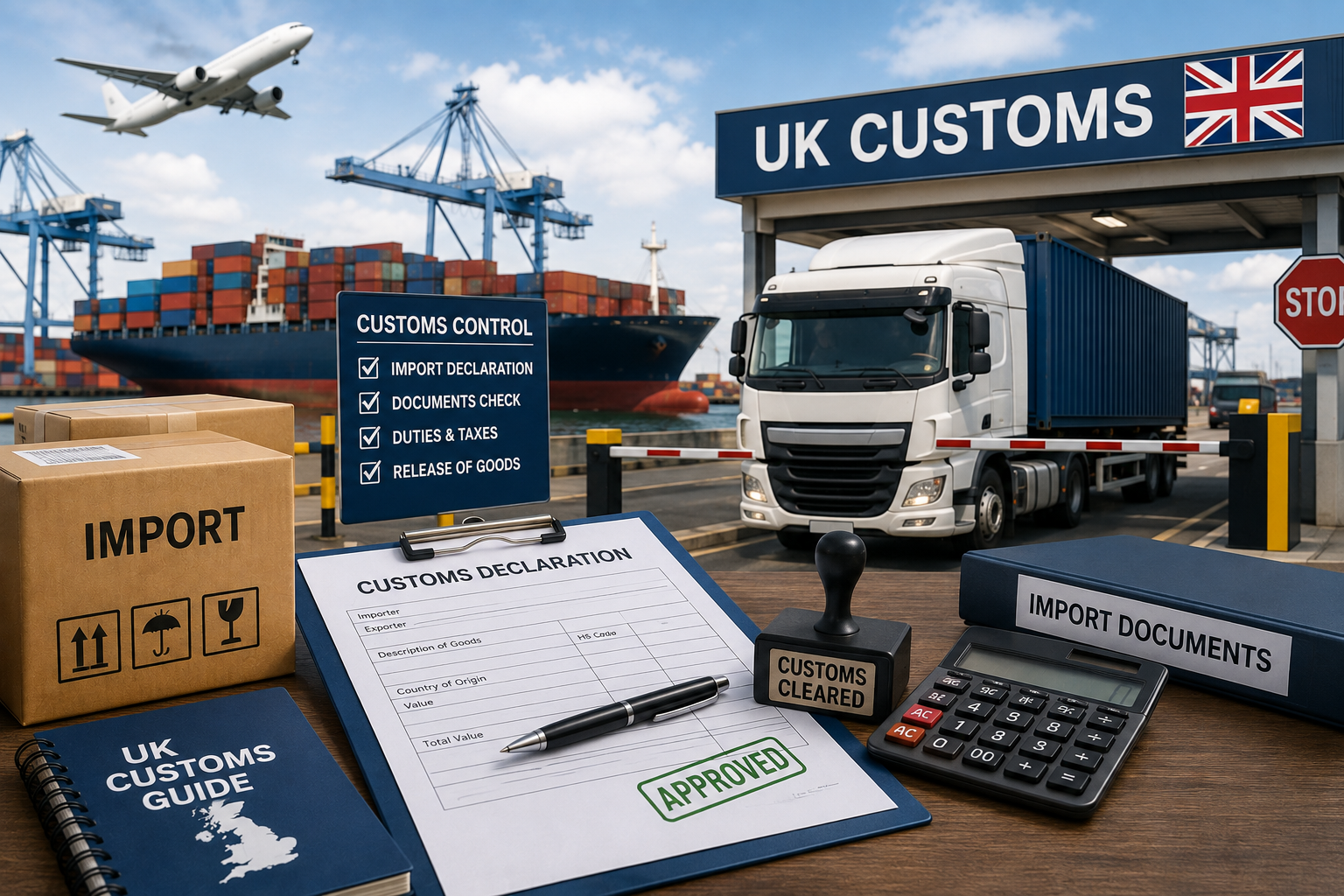
UK customs clearance is the process of declaring goods entering the UK, providing the required customs information and dealing with any Customs Duty, Import VAT, licences or restrictions before the goods can be released.
For a typical business importing goods into Great Britain, the process looks like:
Goods shipped to the UK
↓
Goods arrive at the border
↓
Customs declaration submitted
↓
HMRC checks the declaration
↓
Customs Duty and Import VAT dealt with
↓
Goods cleared
↓
Goods delivered to the business
Many businesses use a customs agent, freight forwarder or courier to handle this process.
Customs clearance allows HMRC and other relevant authorities to check goods entering the country.
The process helps establish:
Commercial imports generally need an appropriate customs declaration.
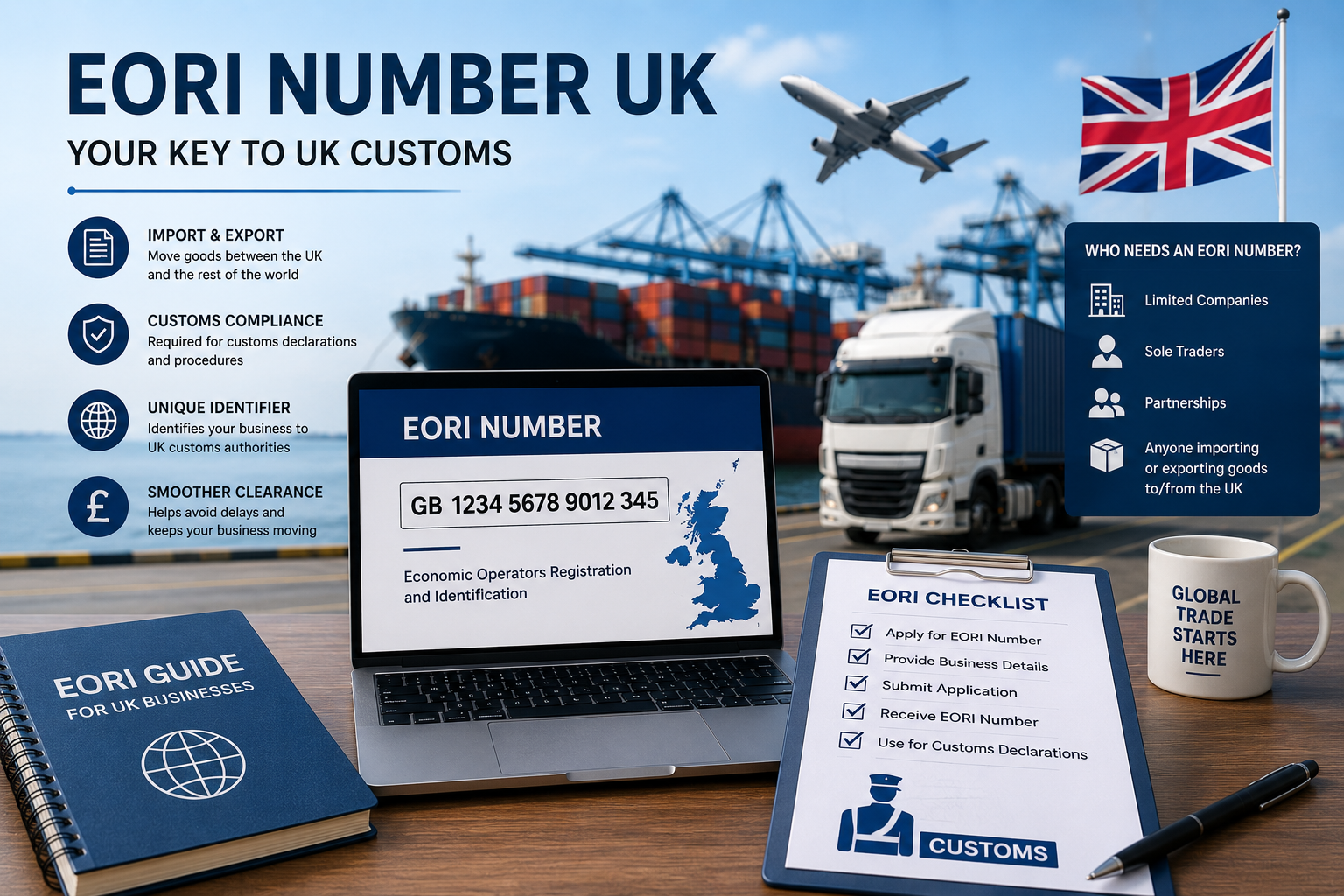
Businesses importing goods into England, Scotland or Wales generally need an EORI number beginning with:
GB
The EORI number identifies the business for customs purposes.
For example:
UK limited company
↓
Imports products from China
↓
GB EORI used on customs declaration
Different EORI requirements can apply to certain movements involving Northern Ireland.
A customs declaration provides HMRC with information about the imported goods.
It can include:
The information must be accurate because it determines how the shipment is treated at customs.
You can potentially make the declaration yourself, but many businesses appoint someone to handle customs for them.
This might include a:
For example, your freight forwarder may transport the shipment from China and arrange the UK customs declaration when it arrives.
However, businesses should still check that the information supplied to customs is correct.
Every product needs the appropriate commodity code for customs purposes.
The commodity code helps determine:
Customs Duty rate
Import VAT treatment
Import restrictions
Licences
Quotas
and other customs measures.
For example, importing clothing may involve a different commodity code and Customs Duty rate from importing electronic equipment.
The correct code can be found through the UK Trade Tariff.
The customs declaration also needs information about where the goods originate.
This is not necessarily the country they were shipped from.
For example:
Goods manufactured in China
↓
Stored in Netherlands
↓
Shipped from Netherlands to UK
The goods may still have Chinese origin.
Origin can affect Customs Duty and whether preferential tariff treatment is available.
The importer must provide the appropriate customs value.
Depending on the transaction, this can include:
Price of goods
Freight
Insurance
Certain additional costs
=
Customs value
The customs value is important because it can affect the amount of Customs Duty and Import VAT payable.
For goods subject to a percentage-based tariff, a simplified calculation is:
Customs value × Customs Duty rate = Customs Duty
For example:
Customs value: £20,000
Illustrative duty rate: 5%
Customs Duty:
£20,000 × 5% = £1,000
The actual duty rate depends on factors such as the commodity code, origin and current UK tariff measures.
Some goods may have a 0% Customs Duty rate.
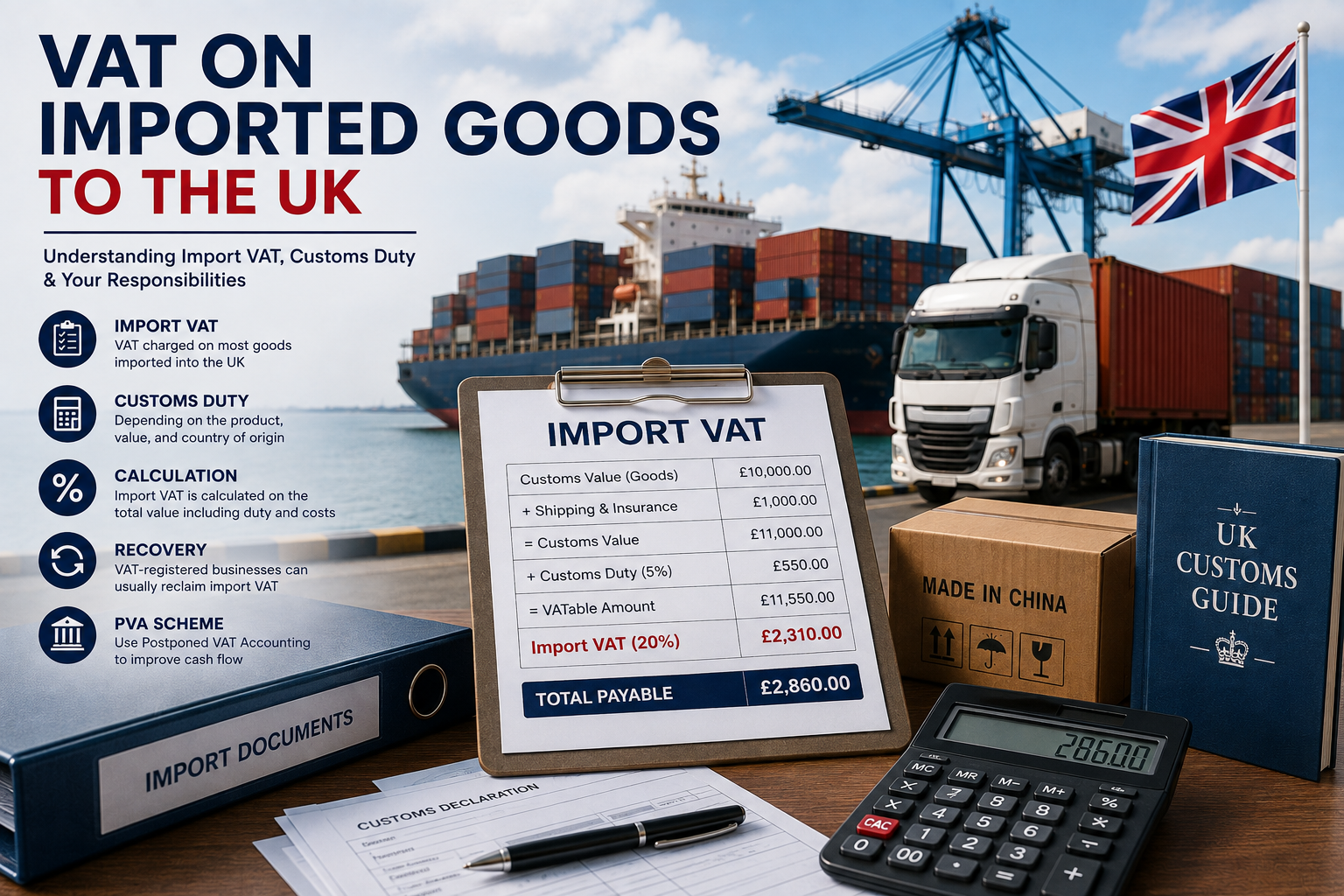
Import VAT is separate from Customs Duty.
A simplified calculation can involve:
Customs value
Customs Duty
Relevant additional costs
=
Import VAT value
The appropriate UK VAT rate is then applied.
Import VAT may potentially be recoverable by a VAT-registered business, subject to the normal VAT recovery rules.
Customs Duty generally remains an import cost.
VAT-registered businesses may be able to use Postponed VAT Accounting (PVA).
Instead of paying Import VAT upfront and reclaiming it later, qualifying businesses can account for Import VAT through their VAT Return.
A simplified process is:
Goods imported
↓
Import VAT calculated
↓
VAT declared on VAT Return
↓
Eligible Import VAT reclaimed on same Return
This can help businesses manage cash flow.
When the shipment reaches the UK, it may initially be held while the customs process is completed.
The declaration is submitted and the goods can be subject to customs checks.
If everything is correct:
Declaration accepted
↓
Taxes and duties dealt with
↓
Any required checks completed
↓
Goods released
↓
Shipment continues to destination
If customs requires additional information, clearance can take longer.
Yes.
HMRC or another relevant authority can request additional documentation or checks.
For example, customs may want to verify:
Some goods can also be subject to physical examination.
The exact documents depend on the shipment, but commonly required information can include:
Commercial invoice
Packing list
Transport document
EORI number
Commodity code
Country of origin
Customs value
Import licences or certificates where required
Insurance information where relevant
Your customs agent may request these documents before the shipment arrives.
The commercial invoice is one of the most important import documents.
It usually includes information such as:
Incorrect or incomplete invoices can cause customs delays.
A packing list provides information about how the shipment is packed.
It may include:
Freight forwarders and customs agents can use this information during transport and clearance.
Incoterms help establish responsibilities between the buyer and seller.
Common examples include:
EXW
FOB
CIF
DAP
DDP
They can affect who is responsible for:
Before importing, make sure you understand who is responsible for UK customs clearance under your commercial agreement.
There is no guaranteed clearance time for every shipment.
A straightforward shipment with:
may clear relatively quickly.
Delays can occur because of:
Businesses should therefore avoid promising customers delivery dates based solely on the international transit time.
Common reasons can include:
Missing customs declaration
Incorrect EORI
Incorrect commodity code
Unclear product description
Incorrect customs value
Missing commercial invoice
Unpaid Customs Duty
Unpaid Import VAT
Missing licence
Product inspection
Origin questions
If your shipment is delayed, your customs agent or freight forwarder should normally be your first point of contact.
Yes, commercial goods imported from China into the UK generally need to go through the relevant customs procedures.
For example:
Chinese supplier
↓
Sea freight to UK
↓
UK customs declaration
↓
Customs Duty and Import VAT assessed
↓
Goods cleared
↓
Delivery to UK warehouse
The same general principle applies to goods imported from other non-UK countries.
Goods moving from the EU into Great Britain are generally subject to customs procedures.
However, qualifying goods can potentially benefit from preferential Customs Duty treatment under the UK-EU trade arrangements if the relevant rules of origin are satisfied.
Do not assume:
Shipped from EU = automatically 0% Customs Duty
The origin of the goods matters.
Often, yes.
International couriers and freight companies commonly provide customs-clearance services.
They may:
However, the importer should still check that the correct information has been used.
This depends partly on the commercial and shipping arrangement.
Possible charges include:
Customs Duty
Import VAT
Excise Duty where applicable
Customs broker fee
Courier administration fee
Port charges
Storage charges
Before ordering goods, establish who is responsible for each cost.
Once HMRC and any other relevant authorities have released the goods, they can normally continue to their destination.
For example:
Port
↓
Customs cleared
↓
Freight forwarder collects shipment
↓
Goods transported to warehouse
↓
Business receives stock
The importer should retain the customs and VAT records for accounting and compliance purposes.
Businesses should avoid:
UK customs clearance is the process of declaring imported goods to customs, dealing with applicable duties, taxes and controls, and obtaining release of the goods.
Businesses importing into England, Scotland or Wales generally need an EORI beginning with GB.
Not necessarily, but many businesses use a customs agent, freight forwarder or courier because customs declarations can be complicated.
Potentially. The rate depends on factors including the product's commodity code, customs value and origin.
Import VAT can apply even where Customs Duty is 0%.
Yes. Customs authorities can request documents or examine goods before releasing them.
The goods are released and can normally continue to their final UK destination.
So, how does UK customs clearance work?
For a typical business import:
Goods shipped to UK
↓
Customs declaration submitted
↓
EORI + commodity code + origin + value declared
↓
Customs Duty calculated
↓
Import VAT accounted for
↓
HMRC checks completed
↓
Goods released
↓
Shipment delivered
For most small businesses, using an experienced customs agent or freight forwarder can make the process considerably easier.
However, the importer should still understand the declaration and make sure the correct:
EORI number + commodity code + country of origin + customs value
are being used.
Errors in any of these areas can lead to additional tax, customs delays or goods being held at the border.
This article provides general information only and does not constitute customs, tax, accounting or legal advice. Customs procedures and requirements can change. Always check current HMRC guidance for the particular goods and movement involved.