By

August 11, 2026
What Is the UK Trade Tariff?
The UK Trade Tariff is the official government tool used to classify goods imported into or exported from the UK.
Businesses can use it to find:
For UK importers, checking the Trade Tariff before ordering goods can help determine customs costs and calculate the true landed cost of a product.
Different products can have different customs requirements.
The tariff helps determine:
What the product is
↓
Which commodity code applies
↓
What duty rate applies
↓
Whether additional customs requirements apply
Using the wrong classification can result in incorrect Customs Duty, import delays or other compliance problems.
A commodity code is a numerical code used to classify goods for customs purposes.
The correct code can depend on factors such as:
Two similar products can therefore have different commodity codes and different duty rates.
Search the UK Trade Tariff using a detailed description of the product.
You may need to know:
What is it?
What is it made from?
What does it do?
How is it used?
Once you identify the appropriate commodity code, you can check the customs measures applying to the product.
Yes.
The tariff can show the Customs Duty rate applicable to a particular commodity code.
However, the rate can also depend on the country of origin.
A simplified process is:
Commodity code + country of origin → applicable tariff rate
Some goods have a standard duty rate of 0%, while others can attract higher rates.
Country of origin can affect whether goods qualify for preferential Customs Duty rates under a UK trade agreement.
Importantly:
Country shipped from ≠ necessarily country of origin
For example, goods manufactured in China but shipped to the UK from a warehouse in Germany may still have Chinese origin for customs purposes.
Businesses should therefore establish the correct origin rather than relying only on the supplier's location.
Goods originating in certain countries may qualify for reduced or zero Customs Duty under UK trade agreements.
For example:
Standard duty → 8%
Preferential duty → 0%
However, the goods must satisfy the relevant rules of origin, and appropriate evidence may be required.
Buying from a country with a UK trade agreement does not automatically guarantee 0% Customs Duty.
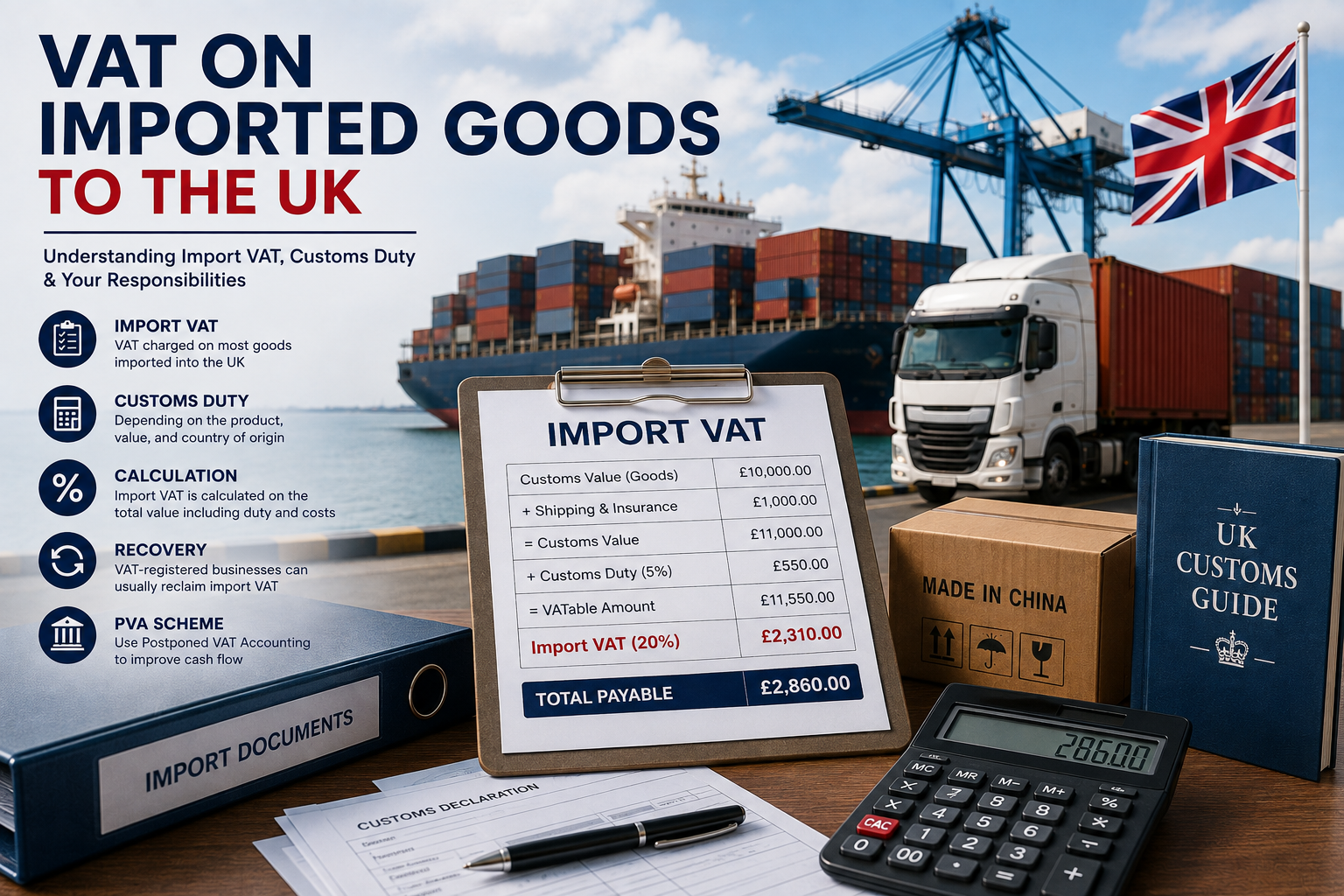
Yes. The tariff can help identify the VAT treatment applicable to imported goods.
However:
Customs Duty
and
Import VAT
are separate charges.
A VAT-registered business may potentially recover eligible import VAT, subject to the normal VAT rules.
Customs Duty generally forms part of the cost of importing the goods.
A tariff suspension can temporarily reduce or remove Customs Duty for particular products.
For example:
Normal duty: 6%
Suspended duty: 0%
Because tariff measures can change, businesses should check the current UK Trade Tariff when importing rather than relying on old duty-rate information.
A tariff quota can allow a specified quantity of goods to enter the UK at a reduced or zero duty rate.
Once the quota is exhausted, a higher tariff may apply.
Quotas can depend on:
The UK Trade Tariff can also identify measures relating to:
Certain goods can therefore require more than simply paying Customs Duty and import VAT.
Some imported products can face additional trade-remedy measures such as:
These charges can sometimes be significantly higher than ordinary Customs Duty.
Importers should check for these measures before placing large overseas orders.
The tariff can help businesses calculate their landed cost.
A simplified calculation is:
Product cost
International freight
Insurance
Customs Duty
Import VAT
Customs clearance
UK delivery
=
Total landed cost
This provides a much more realistic picture of product profitability than looking only at the supplier's price.
Suppose a UK company wants to import products from overseas.
The business could:
1. Identify the product
↓
2. Find the commodity code
↓
3. Determine the country of origin
↓
4. Check the Customs Duty rate
↓
5. Check import VAT
↓
6. Check licences and restrictions
↓
7. Calculate the estimated landed cost
Ideally, this should be completed before ordering the goods.
A supplier's commodity code can be a useful starting point, but UK importers should verify that the classification is appropriate for the UK customs declaration.
Do not automatically assume the supplier's code is correct.
Incorrect classification can potentially result in:
Businesses importing regularly should keep accurate product-classification records.
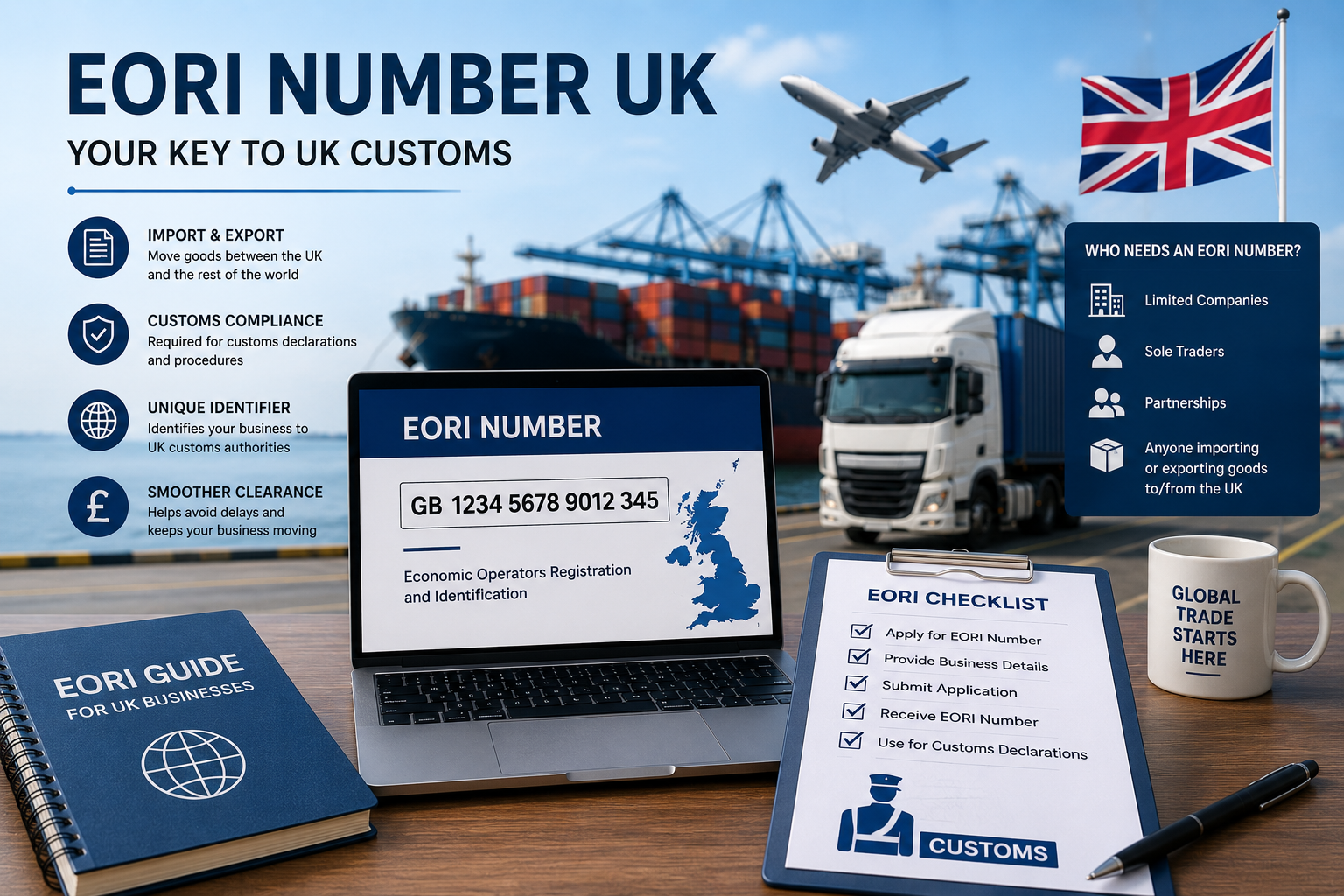
You do not generally need an EORI number simply to search the UK Trade Tariff.
However, businesses involved in importing or exporting goods may need an appropriate EORI number for customs purposes.
The two serve different purposes:
Commodity code → identifies the goods
EORI number → identifies the business for customs purposes
Yes.
Businesses often use:
to prepare customs declarations.
However, the importer should still provide accurate information about the goods and check that the correct commodity code, origin and value are being used.
Yes.
Before placing an overseas order, check:
Commodity code
Country of origin
Customs Duty rate
Import VAT
Preferential tariffs
Quotas
Trade remedies
Licences and restrictions
This helps identify unexpected import costs before committing to a supplier.
Importers should avoid:
The UK Trade Tariff is the official government system used to find commodity codes and check Customs Duty, VAT and other customs requirements.
A commodity code is a numerical classification used to identify goods for customs purposes.
Yes. It can show the tariff measures applying to goods based on their classification and origin.
Yes. The tariff can help identify the VAT treatment applicable to imported goods.
Yes. Some products have a 0% standard rate or may qualify for preferential, suspended or quota-based treatment.
Not automatically. The goods generally need to satisfy the relevant rules of origin.
You can use it as a starting point, but you should verify the correct UK classification.
Yes. Checking before ordering goods can help identify Customs Duty, import VAT and other requirements and calculate the expected landed cost.
The UK Trade Tariff is an essential tool for businesses importing or exporting goods.
It helps determine:
Commodity code
↓
Country of origin
↓
Customs Duty rate
↓
Import VAT
↓
Other customs requirements
For importers, the best time to check the tariff is before ordering stock.
This allows the business to estimate:
Product cost + shipping + Customs Duty + import taxes + clearance = landed cost
The key point is that there is no single UK Import Duty rate for every product.
The amount payable can depend on the product's commodity code, origin, customs value and applicable tariff measures.
Because tariff rates and customs measures can change, always check the current official UK Trade Tariff before importing goods.
This article provides general information only and does not constitute customs, tax, accounting or legal advice. Always check current official guidance for the specific goods being imported or exported.